AI Alignment Infrastructure

Bring a system to AI alignment

Make your enterprise’s expertise part of how your AI learns and improves.

A platform where AI agents elicit expert judgment to engineer rubrics and benchmarks, and to improve harnesses and weights.

Talk to our team
Three cockatiels explore a ribbon nest, carrying a feather in a beak, hanging from the arch, and perching on the rim.

How Teammately aligns your AI

AI leads adaptive expert elicitation

Lemon, Teammately’s AI agent, prepares and adapts expert sessions to uncover the criteria, exceptions, and preferences behind a judgment. Experts contribute their reasoning while Lemon undertakes the preparation and interpretation needed to put it to use.

A small flying AI cockatiel listens to a confident expert cockatiel holding a blue notebook.

Rubrics organized by policies

Carry a judgment beyond the review in which it was made. Rubrics express benchmark criteria; policies organize their scope and precedence so teams can apply shared standards across the enterprise.

Software engineer, lawyer, and customer support cockatiels approve a shared container of rubrics with floating checkmarks.

Control what your benchmarks represent

A benchmark should represent the work your AI must handle, including difficult and consequential conditions. Coverage across ontologies makes the intended situations and proportions explicit, guiding the construction of cases and worlds.

A cockatiel organizes varied benchmark cases to represent common and exceptional conditions.

Improve harnesses and weights

Use the same expert standards to guide harness changes and targeted training data. Evaluate the resulting behavior against planned coverage, keeping gains, regressions, and unresolved judgments visible.

A rising growth arrow accompanies shared policies and OpenAI, Claude, and Hugging Face models.

“We have the technical expertise to improve AI, but how we improve it depends on business context and domain knowledge. Bringing that knowledge into the development process is a major challenge.”

Generative AI Engineer · Enterprise Software
Lemon, Teammately’s cockatiel AI agent

Teammately’s AI agent

Meet Lemon,
your AI agent for alignment.

Lemon undertakes the preparation, investigation, and experimentation around alignment. Follow its work, inspect its findings, and guide what happens next.

Get to know Lemon
Lemon at work
Preparing coverage

Proposed dimensions and ontologies, with the reasoning behind them.

Learning from experts

Focused follow-ups and proposed rubrics for expert review.

Pursuing benchmark goals

Candidate harnesses and the evidence behind them.

One system for enterprise AI alignment.

Expert elicitation

Elicitation

Turn expert judgment into standards your AI can learn.

Lemon Elicit prepares and adapts reviews, comparisons, chat, and voice interviews to uncover the reasoning behind expert judgment. It learns from contributions and develops findings into proposed policies, rubrics, and coverage. Experts review the interpretation while Lemon undertakes the preparation and follow-up work.

Correctness governance

Rubrics

Give teams a shared standard they can apply across AI development.

Rubrics express benchmark criteria; policies organize scope and precedence across teams in enterprises. Trace each criterion to its expert evidence. Lemon investigates conflicts and proposes focused clarification, so inconsistent judgments can reveal a missing condition and lead to a more precise standard.

Coverage Engineering · Lemon Weave

Coverage

Keep the benchmark connected to the work your AI encounters.

Compare imported production interactions with planned representation across ontologies. Emerging intents and missing combinations inform coverage updates while rare, consequential conditions remain explicit. Lemon Weave constructs cases, worlds, and training material. For case synthesis, choose from supported models, including Bower, our coverage-directed synthesis model.

Trialground

Benchmark Eval

Establish which standards the behavior meets.

Trialground runs agent harnesses in disposable sandbox computers and evaluates outputs and recorded trajectories against expert rubrics. Choose from supported judges, including Kestel, our specialized binary rubric model. Compare candidates by policy, rubric, and coverage, with each judgment connected to its criteria and evidence.

Explore Trialground

Improve harnesses and weights

Improve

Develop better harnesses and teach missing distinctions to weights.

Lemon Goal investigates benchmark failures, coordinates subagents, and tests competing harness prototypes while tracking protected behavior and progress. Lemon Weave uses the same expert distinctions to augment training data for supervised demonstrations, preference pairs, and rubric-guided optimization. Engineers gain tested harness ideas and grounded data for further development.

Expert elicitation

Elicitation

Turn expert judgment into standards your AI can learn.

Lemon Elicit prepares and adapts reviews, comparisons, chat, and voice interviews to uncover the reasoning behind expert judgment. It learns from contributions and develops findings into proposed policies, rubrics, and coverage. Experts review the interpretation while Lemon undertakes the preparation and follow-up work.

Correctness governance

Rubrics

Give teams a shared standard they can apply across AI development.

Rubrics express benchmark criteria; policies organize scope and precedence across teams in enterprises. Trace each criterion to its expert evidence. Lemon investigates conflicts and proposes focused clarification, so inconsistent judgments can reveal a missing condition and lead to a more precise standard.

Coverage Engineering · Lemon Weave

Coverage

Keep the benchmark connected to the work your AI encounters.

Compare imported production interactions with planned representation across ontologies. Emerging intents and missing combinations inform coverage updates while rare, consequential conditions remain explicit. Lemon Weave constructs cases, worlds, and training material. For case synthesis, choose from supported models, including Bower, our coverage-directed synthesis model.

Trialground

Benchmark Eval

Establish which standards the behavior meets.

Trialground runs agent harnesses in disposable sandbox computers and evaluates outputs and recorded trajectories against expert rubrics. Choose from supported judges, including Kestel, our specialized binary rubric model. Compare candidates by policy, rubric, and coverage, with each judgment connected to its criteria and evidence.

Explore Trialground

Improve harnesses and weights

Improve

Develop better harnesses and teach missing distinctions to weights.

Lemon Goal investigates benchmark failures, coordinates subagents, and tests competing harness prototypes while tracking protected behavior and progress. Lemon Weave uses the same expert distinctions to augment training data for supervised demonstrations, preference pairs, and rubric-guided optimization. Engineers gain tested harness ideas and grounded data for further development.

Powerful AI is within everyone’s reach. Build your advantage beyond the model. Teammately makes your expertise the difference.

An impressionist retail boutique

Retail · Merchandising

When relevance alone does not make a good recommendation.

A relevant product may still be the wrong recommendation. Customer intent, assortment priorities, availability, and acceptable alternatives change what an experienced merchant would choose.

“What I see in Teammately is a way to turn our experts’ knowledge into a lasting capability for AI development. It goes beyond collecting a dataset once—it gives teams the tools to keep building and improving their own.”

Lead Data Scientist · Fortune 50 Retailer
Read the practiceClose the practice
Expert judgment
Use expert comparisons to uncover why one recommendation is preferable to another. Develop the reasoning into rubrics that preserve customer needs, merchandising priorities, and the conditions under which a substitution is appropriate.
Coverage
Vary customer intent, product attributes, availability, and commercial constraints across ontology tuples. Include cases where several recommendations are defensible, with different trade-offs.
Evidence of improvement
Compare recommendations against the applicable rubrics, including the explanation and proposed alternatives. Examine which customer needs remain unmet and where stronger commercial performance would compromise the intended standard.
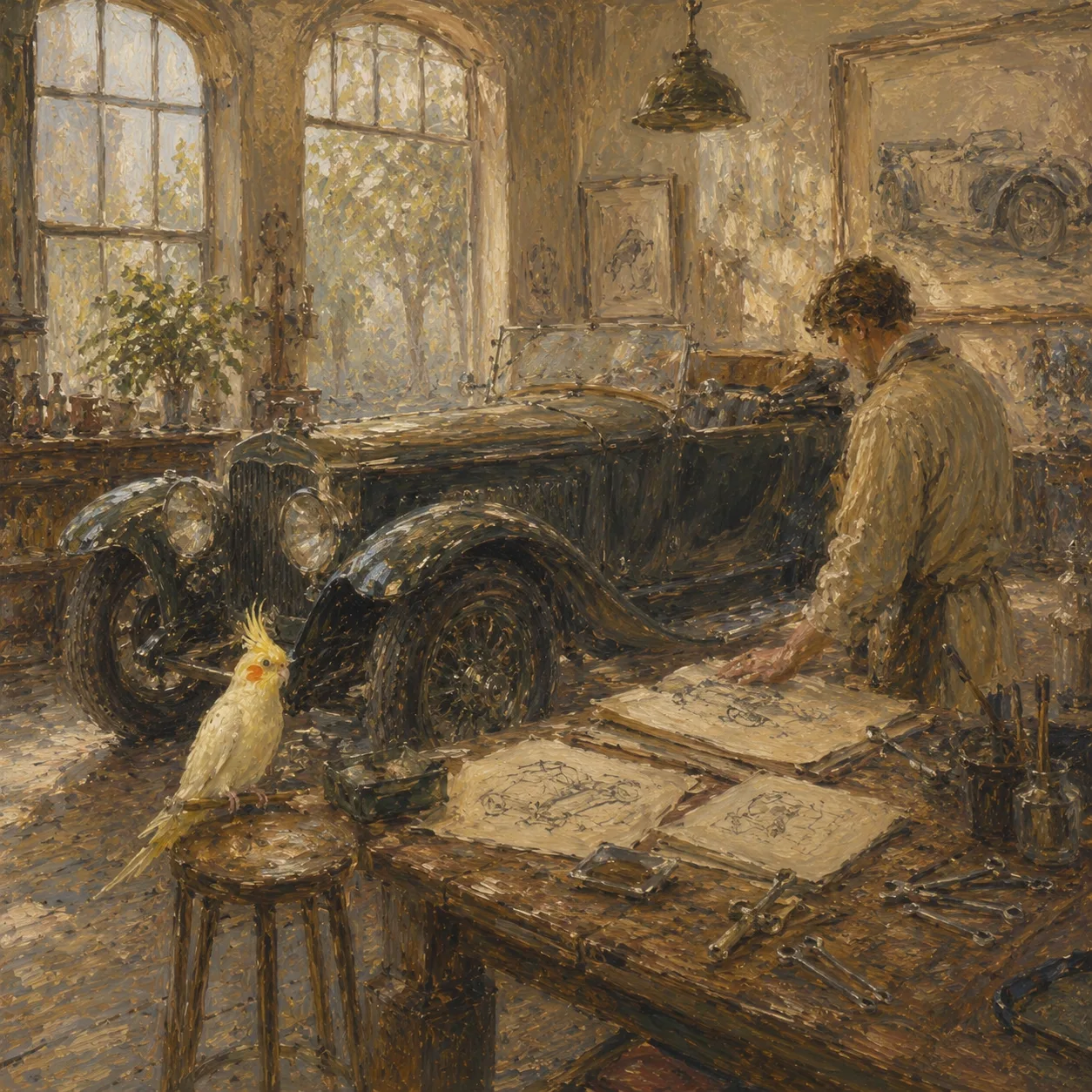
An impressionist engineering studio

Software engineering · Coding-agent skills

Developing skills that generalize across repositories.

Passing tests can leave architecture, maintainability, and local conventions unresolved. A useful skill must carry engineering judgment into unfamiliar tasks.

“A real product needs its own definition of success. Human reviewers have to explain what’s good or bad—and why. Then you have to check whether the AI judge agrees.”

Senior ML Researcher · AI Code Assistant at a Fortune 20 Tech Company
Read the practiceClose the practice
Expert judgment
Use expert comparisons of working implementations to establish what makes a change acceptable beyond functional correctness. Preserve the conditions under which a convention or trade-off applies.
Coverage
Vary task types, repository conventions, dependencies, and incomplete context. Keep assessment repositories and tasks separate from those used to develop the skill.
Evidence of improvement
Use Lemon Goal to investigate skill and harness changes in sandboxed prototypes, with Trialground supplying rubric evidence. Examine whether improvements transfer to the separate assessment tasks and which engineering standards still fail.
An impressionist warehouse

Logistics & industrial operations · Agents in worlds

Testing agents when actions change the world.

An action can be locally reasonable and still leave the next decision in a worse state. The benchmark needs to represent consequences, dependencies, and recovery.

“Teams need a way to see how far their evaluation dataset diverges from actual real-world usage—and when they need to update their test cases.”

Director of ML · SaaS with 500M+ users
Read the practiceClose the practice
Expert judgment
Establish what an agent may change, what evidence it needs before acting, and when recovery or escalation is appropriate. Judge the trajectory as well as its final answer.
Coverage
Use ontology tuples to specify consequential combinations of starting state, available information, tool behavior, and constraints. Synthesize worlds that exercise those conditions.
Evidence of improvement
Use Trialground to run harnesses against the defined environments and inspect recorded actions, state changes, and outcomes. Compare completion, violations, and recovery across the conditions tested.
An impressionist study with documents under review

Model development · Training data

Turning benchmark failures into targeted training data.

Repeated failures can reveal a missing distinction or an underrepresented condition. Expert rubrics and coverage direct Lemon Weave’s training-data augmentation, with independent assessment testing what the resulting weights have learned.

An impressionist airport tarmac

Airlines · Customer support

Resolving complex passenger cases when disruption changes the options.

Passenger support combines fare rules, connection dependencies, limited rebooking options, and service recovery. Capture how experienced teams weigh those constraints, then test whether agents can reach feasible resolutions, explain trade-offs, and recognize when an exception needs expert attention.

Read the practiceClose the practice
Expert judgment
Elicit how service experts distinguish an available itinerary from an acceptable resolution for the passenger. Carry fare conditions, journey dependencies, recovery options, and exception authority into benchmark criteria.
Coverage
Represent combinations of disruption, remaining connections, traveler needs, scarce alternatives, and changing availability. Include incomplete information and cases where resolving one leg leaves the wider journey unresolved.
Evidence of improvement
Assess whether proposed resolutions remain feasible under the supplied conditions, whether explanations distinguish confirmed options from possibilities, and whether escalation is appropriate. Examine performance across complex case types that become frequent during widespread disruption.
An impressionist advisor meeting

Financial services · Research

Establishing which evidence is sufficient for a recommendation.

Citing a source does not establish that a conclusion is warranted. Expert judgment determines which evidence applies, what remains uncertain, and how far a recommendation can go.

Read the practiceClose the practice
Expert judgment
Capture how research and advisory experts weigh evidence, distinguish supported conclusions from inference, and qualify uncertainty. Organize those distinctions into rubrics and policies with clear scope.
Coverage
Vary source quality, freshness, conflicting findings, research purpose, and missing context. Include cases where a persuasive synthesis would overstate what the evidence supports.
Evidence of improvement
Evaluate advisor-facing research and communication preparation against those criteria. Compare evidence use, material omissions, uncertainty, and unsupported conclusions while preserving the role of professional review.

“Teammately is addressing many of the problems we’re trying to solve. I can see how our organization could benefit.”

Senior ML Engineer · Marketing SaaS

Teammately models

Our models for evaluation and synthesis.

Meet Kestel and Bower. We fine-tune open-weight models for two demanding tasks: applying expert rubrics and constructing cases across planned coverage. Our objective is fair assessment and useful development material across model families.

Trialground Evaluation

Kestel

Binary rubric evaluation

Assess whether candidate behavior meets each applicable criterion. Kestel is trained for binary rubric judgments, with consistent application across model families as an objective.

Lemon Weave

Bower

Coverage-directed case synthesis

Construct cases around ontology tuples and expert criteria. Bower is trained for coverage-directed synthesis, supporting benchmarks, expert elicitation, and targeted training material.

Research

We study how human intent becomes reliable AI behavior.

Our research investigates how expert knowledge can be captured, tested, transferred, and preserved in increasingly autonomous AI systems. Some of this work directly informs Teammately; some explores the foundations the product may depend on years from now.

Structured Supervision

How much can one minute of expert judgment teach a model?

We compare forms of expert supervision by the behavioral improvement they produce for equivalent human effort.

Explore the research

Benchmark Science

When does a benchmark actually predict behavior?

We study how coverage, case construction, and holdout design determine what evaluation results can reliably establish.

Explore the research

Behavioral Adaptation

How does intent transfer into model behavior?

We investigate how structured intent can improve prompts, harnesses, training data, and model weights without merely learning the test.

Explore the research

Delegated Agency

Does intent survive delegation?

We study how objectives and constraints change as work passes through agents, subagents, tools, and long-running processes.

Explore the research
Explore our research agenda

Evaluating Teammately

Where Teammately fits.
What starting involves.

How does Teammately compare with Scale, Surge, and Mercor?

Scale, Surge, and Mercor help teams build expert-informed datasets, evaluations, and model improvement programs. Their offerings combine expert workforces, technology, and support for designing and executing these programs.

Teammately is an agent-driven software platform for making your organization’s expertise part of how your AI learns and improves. Its agents prepare review materials, organize questions and context, and adapt elicitation as experts respond. They investigate the reasoning, exceptions, and conditions behind judgments, then develop findings into proposed rubrics, policies, and benchmark coverage. Agents undertake the preparation, inquiry, and interpretation; experts contribute judgment. Your team can inspect proposed rubrics and policies alongside linked expert evidence and cases, revise them, and decide which standards to adopt.

The value compounds as those standards develop. When an expert clarifies an exception or decision boundary, that finding can guide related benchmark cases, training-data synthesis, and harness experiments. Shared policies organize how standards apply across teams, while further expert contributions focus on what has changed or remains unresolved. Teammately is especially relevant when your team wants an ongoing capability to maintain and apply its expertise throughout AI development.


How does Teammately fit alongside LangSmith, Braintrust, or Langfuse?

Teammately can work alongside your tracing, evaluation, and development tools. It gives your AI team a system for organizing expert elicitation, designing benchmark representation, and connecting that work to offline training and optimization.

AI observability and evaluation platforms such as LangSmith, Braintrust, and Langfuse already help teams connect production observation with evaluation and dataset development. Teammately complements these workflows through coverage design across ontologies, helping identify where changing user behavior diverges from what your benchmark represents. Production evidence grounds that design in actual usage, while expert standards and coverage objectives guide how the benchmark’s cases, combinations, and proportions evolve. Coverage also preserves rare, consequential situations that recent traffic may not contain.

Stable benchmark versions give teams a shared basis for comparing improvements, while expert review and synthesis of neighboring scenarios help clarify decision boundaries, establish shared policies and rubrics, and determine how much each class of cases should influence the benchmark and the direction of development. Together, these capabilities support a continuous loop of production analysis, benchmark refinement, and evaluation, with data exchange scoped to your existing setup.

How does Teammately handle ambiguous or conflicting expert judgments?

Different judgments can reflect missing context, competing priorities, or different expectations about where a rule applies. Teammately’s agents investigate those distinctions and prepare focused questions, comparisons, or reviews to clarify them.

Experts and accountable owners decide what should become a shared standard, where an exception applies, and what remains unresolved.

Do we retain ownership of what we build with Teammately?

Your expertise, standards, benchmarks, and development assets remain yours.

We don’t use your workspace data to train shared models or optimize harnesses for other workspaces without your permission. See our Privacy Policy and Trust Center for more on data handling.

Who operates Teammately, and where do we start?

Teammately provides a development workspace for your AI team and a dedicated participation interface for domain experts. Your AI team works with agents to direct elicitation, review standards and coverage, and evaluate candidate improvements. Engineers decide which development changes to adopt.

Experts contribute through prepared reviews, comparisons, forms, chat, and voice interviews. Agents handle the preparation, adaptive elicitation, and interpretation, so experts can focus on the judgments and distinctions that need their expertise.

Bring a development objective and the materials you already have. You can begin with a new initiative, a training requirement, or an existing system; a finished benchmark is not required.

What would an initial scope deliver?

Together, we select a useful first output for your objective: reviewed rubrics and coverage, a benchmark, targeted training data, or harness changes tested against agreed criteria. The choice follows your development needs and the materials you already have.

We agree on the development decision the first result should support and how to assess it. For example, a benchmark can establish a baseline against reviewed expert criteria, while a harness experiment can show which requirements improved, which regressed, and what remains unresolved.

We define the expert participation, integrations, and execution or training environment the work requires. Responsibilities, usage assumptions, and compute costs are agreed as part of that scope. Review the pricing structure.

Built around your judgment

Let’s define where your AI should improve.

Share your development objective and what you have today. We’ll work out where Teammately can contribute, what a useful first result would be, and the expert participation, coverage, and integration it requires.